One of the biggest takeaways from my time in the Digital Education Leadership program through Seattle Pacific University is that teachers are students, too. When diving into effective mentoring and professional development, some of the most successful strategies are those that are also used in the classroom. Many back-to-school workshops remind teachers to get to know their students and provide differentiation in every learning experience. In other words, providing learners (adults included) with a pre-assessment (formal or informal) to determine where they are in order to reach where they need to be.
Edutopia has a great article and video that touches on the importance of assessment before learning even begins:
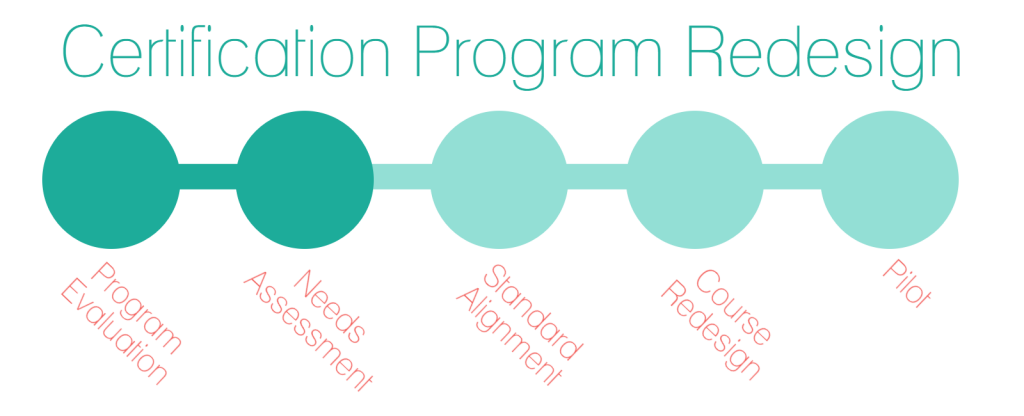
In an earlier post, I wrote about my journey in reviewing and redesigning a university’s Library Media Endorsement (LME) certification program. Here, I continue that work by drafting a Needs Assessment survey for potential students. As I mentioned in my last post, the program is not yet finalized, so I am omitting the name of the institution and it will henceforth be identified as “University.”
Before writing the Needs Assessment survey, I did a bit of background research, attempting to see how other schools have assessed their incoming … Read More
]]>
One of the biggest takeaways from my time in the Digital Education Leadership program through Seattle Pacific University is that teachers are students, too. When diving into effective mentoring and professional development, some of the most successful strategies are those that are also used in the classroom. Many back-to-school workshops remind teachers to get to know their students and provide differentiation in every learning experience. In other words, providing learners (adults included) with a pre-assessment (formal or informal) to determine where they are in order to reach where they need to be.
Edutopia has a great article and video that touches on the importance of assessment before learning even begins:
In an earlier post, I wrote about my journey in reviewing and redesigning a university’s Library Media Endorsement (LME) certification program. Here, I continue that work by drafting a Needs Assessment survey for potential students. As I mentioned in my last post, the program is not yet finalized, so I am omitting the name of the institution and it will henceforth be identified as “University.”
Before writing the Needs Assessment survey, I did a bit of background research, attempting to see how other schools have assessed their incoming … Read More
]]>
When I talk to people about the Digital Education Leadership program through Seattle Pacific University, I often end up saying, “Well, there’s homework, but it’s not really homework. I do work, but it’s directly related to my responsibilities as a librarian and an educator. So, it’s homework but it’s not really homework. It’s bigger than that. It has more significance than ‘homework.'” While this has been proven throughout the duration of the program, it couldn’t have been more true than when I was offered the opportunity to redesign a Library Media Endorsement certification program… As part of my “homework.”
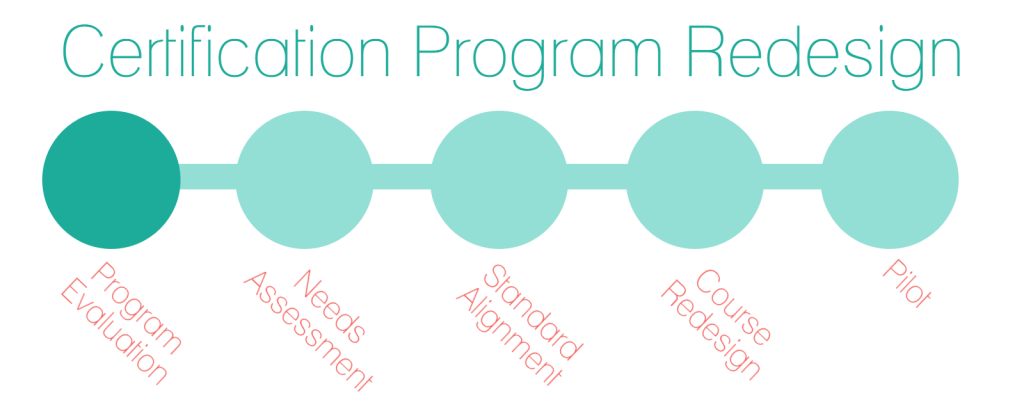
My classmates and I were recently tasked with conducting a program evaluation. Students learned “how to conduct needs assessments, develop technology-related professional learning programs, evaluate the impact on instructional practice and student learning, and communicate findings to the institution” (Course syllabus). Dr. David Wicks, Chair of the Digital Education Leadership program, came to me with a wonderful opportunity to redesign a university’s Library Media Endorsement (LME) certification program. Because the program is not yet finalized, I am omitting the name of the institution and it will henceforth be identified as “University.”
Program Evaluation
The project was designed to evaluate … Read More
]]>
When I talk to people about the Digital Education Leadership program through Seattle Pacific University, I often end up saying, “Well, there’s homework, but it’s not really homework. I do work, but it’s directly related to my responsibilities as a librarian and an educator. So, it’s homework but it’s not really homework. It’s bigger than that. It has more significance than ‘homework.'” While this has been proven throughout the duration of the program, it couldn’t have been more true than when I was offered the opportunity to redesign a Library Media Endorsement certification program… As part of my “homework.”
My classmates and I were recently tasked with conducting a program evaluation. Students learned “how to conduct needs assessments, develop technology-related professional learning programs, evaluate the impact on instructional practice and student learning, and communicate findings to the institution” (Course syllabus). Dr. David Wicks, Chair of the Digital Education Leadership program, came to me with a wonderful opportunity to redesign a university’s Library Media Endorsement (LME) certification program. Because the program is not yet finalized, I am omitting the name of the institution and it will henceforth be identified as “University.”
Program Evaluation
The project was designed to evaluate … Read More
]]>
- Facilitator – Planning and leading meetings, activities, and staff development in one-on-one, small group, or large group situations.
- Collaborator – Working together with colleagues to plan, implement, and evaluate activities.
- Expert – Acting as a subject matter expert on a variety of topics.
- Catalyst – Helping teachers reflect on and improve
- Facilitator – Planning and leading meetings, activities, and staff development in one-on-one, small group, or large group situations.
- Collaborator – Working together with colleagues to plan, implement, and evaluate activities.
- Expert – Acting as a subject matter expert on a variety of topics.
- Catalyst – Helping teachers reflect on and improve
As I move forward in my examination of GAFE, a suite of productivity applications that Google offers free to schools, I am going to look at the pros and cons and how those nuances might play a role in the adoption of this learning tool. With that being said, this is not a review of GAFE, it’s not a comparative list between GAFE and Microsoft. It’s a question of whether or not this specific tool can meet the specific needs of my faculty and students. In his article, Computer Criticism vs. Technocentric Thinking, Seymour Papert argues that when evaluating a new … Read More
]]>As I move forward in my examination of GAFE, a suite of productivity applications that Google offers free to schools, I am going to look at the pros and cons and how those nuances might play a role in the adoption of this learning tool. With that being said, this is not a review of GAFE, it’s not a comparative list between GAFE and Microsoft. It’s a question of whether or not this specific tool can meet the specific needs of my faculty and students. In his article, Computer Criticism vs. Technocentric Thinking, Seymour Papert argues that when evaluating a new … Read More
]]>My school recently revisited our Acceptable Use Policy (AUP) after not having revised it in over two years. We found several discrepancies and have noted that several parents, while they signed the document, still had an array of questions about the one-to-one laptop program and what the laptops should (and shouldn’t) be used for both on and off campus. With this in mind, the school’s Tech Task Force debated the idea of requiring students and parents to attend an orientation in addition to just signing the AUP. I reviewed the policies and procedures of several other schools in an effort to find what works best for the majority. It seems, there is no majority. All schools approach this issue differently, with varying levels of success. What works for one school, doesn’t work for the … Read More
]]>My school recently revisited our Acceptable Use Policy (AUP) after not having revised it in over two years. We found several discrepancies and have noted that several parents, while they signed the document, still had an array of questions about the one-to-one laptop program and what the laptops should (and shouldn’t) be used for both on and off campus. With this in mind, the school’s Tech Task Force debated the idea of requiring students and parents to attend an orientation in addition to just signing the AUP. I reviewed the policies and procedures of several other schools in an effort to find what works best for the majority. It seems, there is no majority. All schools approach this issue differently, with varying levels of success. What works for one school, doesn’t work for the … Read More
]]>Global collaborative projects help students become connected learners and provide them with authentic opportunities to learn from other people and experiences. These types of projects also provide students with new, diverse perspectives and help prepare them for an international workplace. In this project, you will collaborate with others outside of the Digital Education Leadership program to design and implement a global learning experience utilizing digital tools.
As I did some brainstorming for this project, the Great Brain told me about Mystery Skype. How did I not know this existed? If you’re … Read More
]]>Global collaborative projects help students become connected learners and provide them with authentic opportunities to learn from other people and experiences. These types of projects also provide students with new, diverse perspectives and help prepare them for an international workplace. In this project, you will collaborate with others outside of the Digital Education Leadership program to design and implement a global learning experience utilizing digital tools.
As I did some brainstorming for this project, the Great Brain told me about Mystery Skype. How did I not know this existed? If you’re … Read More
]]>
Questions
- Based on the link I shared with you earlier this week, can you tell me what you think the term “Digital Citizenship” means? (Provide a copy of the ISTE Citizenship in the Digital Age, if needed).
- What role do you think technology plays in today’s classroom?
- Can you tell me your perspective on where we’ve come from, where we are, and where we’re going, in regards to digital citizenship and educational technology? Are you comfortable with the rate at which we are progressing?
- What challenges do you find that we’re currently facing with educational technology?
- Do you have any concerns regarding access to the use of technology? Do all families have equal access? Are there concerns regarding families who are resistant to bringing technology into their home? If so, do you have a plan of action you would like to see
Questions
- Based on the link I shared with you earlier this week, can you tell me what you think the term “Digital Citizenship” means? (Provide a copy of the ISTE Citizenship in the Digital Age, if needed).
- What role do you think technology plays in today’s classroom?
- Can you tell me your perspective on where we’ve come from, where we are, and where we’re going, in regards to digital citizenship and educational technology? Are you comfortable with the rate at which we are progressing?
- What challenges do you find that we’re currently facing with educational technology?
- Do you have any concerns regarding access to the use of technology? Do all families have equal access? Are there concerns regarding families who are resistant to bringing technology into their home? If so, do you have a plan of action you would like to see