One of the biggest takeaways from my time in the Digital Education Leadership program through Seattle Pacific University is that teachers are students, too. When diving into effective mentoring and professional development, some of the most successful strategies are those that are also used in the classroom. Many back-to-school workshops remind teachers to get to know their students and provide differentiation in every learning experience. In other words, providing learners (adults included) with a pre-assessment (formal or informal) to determine where they are in order to reach where they need to be.
Edutopia has a great article and video that touches on the importance of assessment before learning even begins:
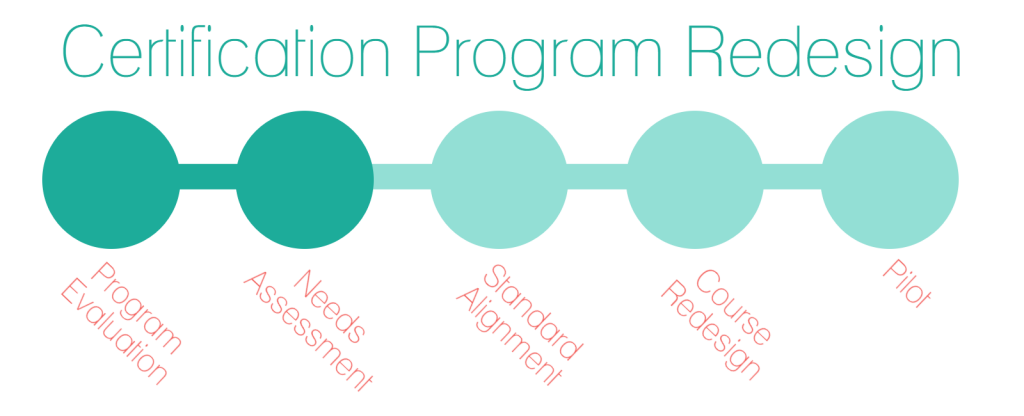
In an earlier post, I wrote about my journey in reviewing and redesigning a university’s Library Media Endorsement (LME) certification program. Here, I continue that work by drafting a Needs Assessment survey for potential students. As I mentioned in my last post, the program is not yet finalized, so I am omitting the name of the institution and it will henceforth be identified as “University.”
Before writing the Needs Assessment survey, I did a bit of background research, attempting to see how other schools have assessed their incoming … Read More
]]>
One of the biggest takeaways from my time in the Digital Education Leadership program through Seattle Pacific University is that teachers are students, too. When diving into effective mentoring and professional development, some of the most successful strategies are those that are also used in the classroom. Many back-to-school workshops remind teachers to get to know their students and provide differentiation in every learning experience. In other words, providing learners (adults included) with a pre-assessment (formal or informal) to determine where they are in order to reach where they need to be.
Edutopia has a great article and video that touches on the importance of assessment before learning even begins:
In an earlier post, I wrote about my journey in reviewing and redesigning a university’s Library Media Endorsement (LME) certification program. Here, I continue that work by drafting a Needs Assessment survey for potential students. As I mentioned in my last post, the program is not yet finalized, so I am omitting the name of the institution and it will henceforth be identified as “University.”
Before writing the Needs Assessment survey, I did a bit of background research, attempting to see how other schools have assessed their incoming … Read More
]]>
When I talk to people about the Digital Education Leadership program through Seattle Pacific University, I often end up saying, “Well, there’s homework, but it’s not really homework. I do work, but it’s directly related to my responsibilities as a librarian and an educator. So, it’s homework but it’s not really homework. It’s bigger than that. It has more significance than ‘homework.'” While this has been proven throughout the duration of the program, it couldn’t have been more true than when I was offered the opportunity to redesign a Library Media Endorsement certification program… As part of my “homework.”
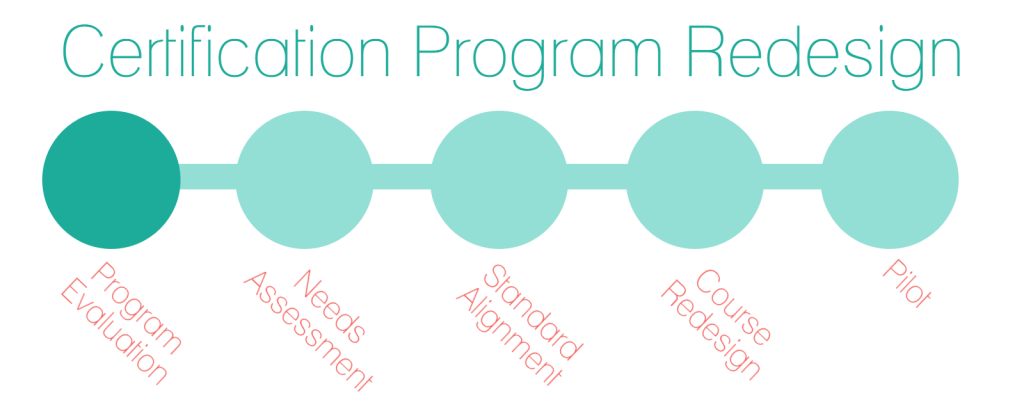
My classmates and I were recently tasked with conducting a program evaluation. Students learned “how to conduct needs assessments, develop technology-related professional learning programs, evaluate the impact on instructional practice and student learning, and communicate findings to the institution” (Course syllabus). Dr. David Wicks, Chair of the Digital Education Leadership program, came to me with a wonderful opportunity to redesign a university’s Library Media Endorsement (LME) certification program. Because the program is not yet finalized, I am omitting the name of the institution and it will henceforth be identified as “University.”
Program Evaluation
The project was designed to evaluate … Read More
]]>
When I talk to people about the Digital Education Leadership program through Seattle Pacific University, I often end up saying, “Well, there’s homework, but it’s not really homework. I do work, but it’s directly related to my responsibilities as a librarian and an educator. So, it’s homework but it’s not really homework. It’s bigger than that. It has more significance than ‘homework.'” While this has been proven throughout the duration of the program, it couldn’t have been more true than when I was offered the opportunity to redesign a Library Media Endorsement certification program… As part of my “homework.”
My classmates and I were recently tasked with conducting a program evaluation. Students learned “how to conduct needs assessments, develop technology-related professional learning programs, evaluate the impact on instructional practice and student learning, and communicate findings to the institution” (Course syllabus). Dr. David Wicks, Chair of the Digital Education Leadership program, came to me with a wonderful opportunity to redesign a university’s Library Media Endorsement (LME) certification program. Because the program is not yet finalized, I am omitting the name of the institution and it will henceforth be identified as “University.”
Program Evaluation
The project was designed to evaluate … Read More
]]>Global collaborative projects help students become connected learners and provide them with authentic opportunities to learn from other people and experiences. These types of projects also provide students with new, diverse perspectives and help prepare them for an international workplace. In this project, you will collaborate with others outside of the Digital Education Leadership program to design and implement a global learning experience utilizing digital tools.
As I did some brainstorming for this project, the Great Brain told me about Mystery Skype. How did I not know this existed? If you’re … Read More
]]>Global collaborative projects help students become connected learners and provide them with authentic opportunities to learn from other people and experiences. These types of projects also provide students with new, diverse perspectives and help prepare them for an international workplace. In this project, you will collaborate with others outside of the Digital Education Leadership program to design and implement a global learning experience utilizing digital tools.
As I did some brainstorming for this project, the Great Brain told me about Mystery Skype. How did I not know this existed? If you’re … Read More
]]>While I am still processing the difference between the many sets of standards, I am approaching my exploration this semester from the perspective of a librarian who is there to serve both students and teachers in order to take their learning and teaching to the next level. This week, I was given the following question and asked to explore it in a way … Read More
]]>While I am still processing the difference between the many sets of standards, I am approaching my exploration this semester from the perspective of a librarian who is there to serve both students and teachers in order to take their learning and teaching to the next level. This week, I was given the following question and asked to explore it in a way … Read More
]]>How Was This Model Used?
Using the ASSURE Model, I designed a student-created book trailer project, where students share their excitement of a favorite book in an effort to increase circulation rates and encourage reading for pleasure. Here you will find my plans for the project, following the ASSURE Model:
Reflection on the Process
I have started this project with my third grade class and it has been a huge success. The students are coming to library excited, ready to work and eager to move through the steps of the process. The students are still in the initial planning phases, but based on their work thus far, I anticipate the success will continue. One of the most exciting, unforeseen benefits of the introduction of this project has been the decline in behavioral management issues, the students are active … Read More
]]>How Was This Model Used?
Using the ASSURE Model, I designed a student-created book trailer project, where students share their excitement of a favorite book in an effort to increase circulation rates and encourage reading for pleasure. Here you will find my plans for the project, following the ASSURE Model:
Reflection on the Process
I have started this project with my third grade class and it has been a huge success. The students are coming to library excited, ready to work and eager to move through the steps of the process. The students are still in the initial planning phases, but based on their work thus far, I anticipate the success will continue. One of the most exciting, unforeseen benefits of the introduction of this project has been the decline in behavioral management issues, the students are active … Read More
]]>I recently attended an EdCamp (if you’re unfamiliar with the term, this video is a must) where I met with several librarians who were talking about the need for basic computer skill instruction. After much discussion and reflecting on the standard for this week, I was left asking myself the following question:
How can the library play a central role in facilitating a scope and sequence of computer skills for students in the … Read More
]]>I recently attended an EdCamp (if you’re unfamiliar with the term, this video is a must) where I met with several librarians who were talking about the need for basic computer skill instruction. After much discussion and reflecting on the standard for this week, I was left asking myself the following question:
How can the library play a central role in facilitating a scope and sequence of computer skills for students in the … Read More
]]>I recently started teaching sixth and seventh grade students the research process using the Big6™ Research Model, you can read more about that experience in my last blog post. During that lesson, I found that the students’ biggest challenges were some of the skills I thought would be the most simple. The most notable being, the ability to identify keywords that would help them conduct their research. The students were able to formulate several questions related to their science fair topic but when asked to select three to five keywords based on those questions, they struggled. My intended goal for the students was for them to review their questions, determine how those questions were related, and extract a number of succinct terms that will allow them to conduct effective research. I discovered … Read More
]]>I recently started teaching sixth and seventh grade students the research process using the Big6 Research Model, you can read more about that experience in my last blog post. During that lesson, I found that the students’ biggest challenges were some of the skills I thought would be the most simple. The most notable being, the ability to identify keywords that would help them conduct their research. The students were able to formulate several questions related to their science fair topic but when asked to select three to five keywords based on those questions, they struggled. My intended goal for the students was for them to review their questions, determine how those questions were related, and extract a number of succinct terms that will allow them to conduct effective research. I discovered … Read More
While I did not incorporate the use of Skype into that standard, it was a tool that I was interested in exploring further and found that it conformed nicely with the communication and collaboration standard. In an effort to enhance the library program and provide my students with opportunities to deepen their interest in reading for pleasure (my never-ending quest as a librarian), I attempted to answer the following question:
How can students … Read More
]]>While I did not incorporate the use of Skype into that standard, it was a tool that I was interested in exploring further and found that it conformed nicely with the communication and collaboration standard. In an effort to enhance the library program and provide my students with opportunities to deepen their interest in reading for pleasure (my never-ending quest as a librarian), I attempted to answer the following question:
How can students … Read More
]]>In my “I’m-not-a-classroom-teacher” state of mind, I was tasked with examining the first ISTE standard and determine how students can “demonstrate creative thinking, construct knowledge, and develop innovative products and processes using technology.” Through this, I asked the following:
How can students use technology to demonstrate their understanding of a book to connect with other fans outside of the school community (fan fiction, global read-alouds) and, potentially, the author themselves (Twitter, … Read More
]]>In my “I’m-not-a-classroom-teacher” state of mind, I was tasked with examining the first ISTE standard and determine how students can “demonstrate creative thinking, construct knowledge, and develop innovative products and processes using technology.” Through this, I asked the following:
How can students use technology to demonstrate their understanding of a book to connect with other fans outside of the school community (fan fiction, global read-alouds) and, potentially, the author themselves (Twitter, … Read More
]]>